Choosing a lace colour that works for your skin tone
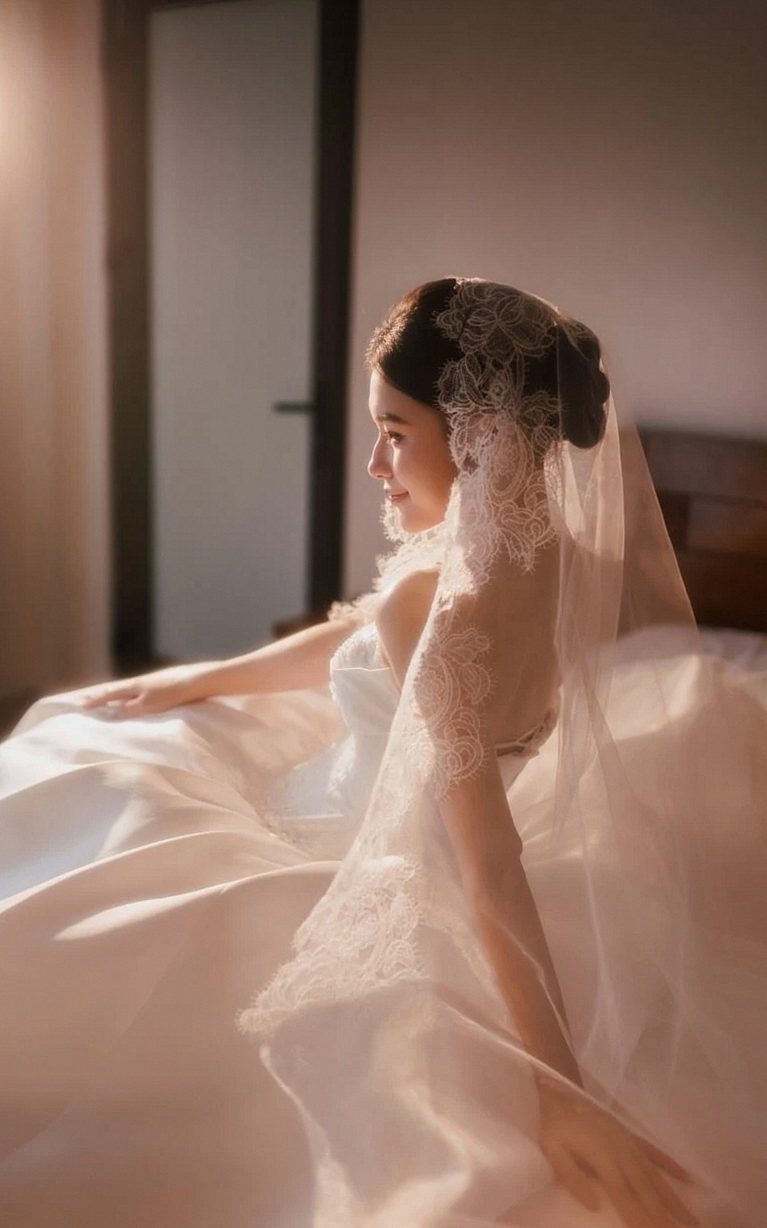
The question of which lace colour to choose comes up in almost every first commission conversation. It is not a question with a single correct answer, but there are a few practical observations that help narrow the options, particularly for clients who have not worn bespoke lingerie before.
White and ivory: the difference in practice
White and ivory are often treated as interchangeable, but they behave differently against the skin. A bright white lace creates a strong contrast against most skin tones, which can look striking in photographs but feels less intimate in wear. Ivory, particularly the deep ivory in the autumn 2026 palette, sits closer to the warmth of most skin tones and tends to feel more flattering in everyday wear.
The distinction matters most for bridal commissions. Many clients assume they want white because it reads as bridal, but ivory is the more common choice once they see both options on a sample card. The Calais lace in deep ivory has a warmth that photographs well against both lighter and darker skin tones.
Black lace: more versatile than it appears
Black lace is the most versatile option in the Dew Geyser palette and the one that works across the widest range of skin tones. It is also the option that ages best: a black lace piece that has been well cared for looks essentially the same after three years as it did when new, whereas white and ivory can develop a slight yellowing if stored incorrectly.
The seasonal colourways
The autumn 2026 palette introduces burgundy and charcoal alongside the carried-over slate grey. Burgundy works particularly well against warmer skin tones; charcoal is closer to a neutral and works across a wider range. Slate grey is the subtlest of the three and tends to appeal to clients who find black too stark but want something darker than ivory.
If you are unsure which direction to go, the sample card is the most useful tool. Seeing the lace against your own skin in your own light is more informative than any description.
Colour choice is one of the things we are happy to discuss during the initial enquiry. If you describe your skin tone and the occasion the piece is for, we can suggest which options from the current palette are most likely to work.